Precision within constraints
Car dimensions, mass, wings, wheels and the cartridge chamber are governed by technical rules. CAD modelling must account for these limits and the tolerances involved in manufacturing.
STEM RACING / SINCE SEPTEMBER 2023
My first engineering project made a possible career feel real. Through designing a miniature racing car, I discovered that designing and building things was something I wanted to keep doing.
Explore my journey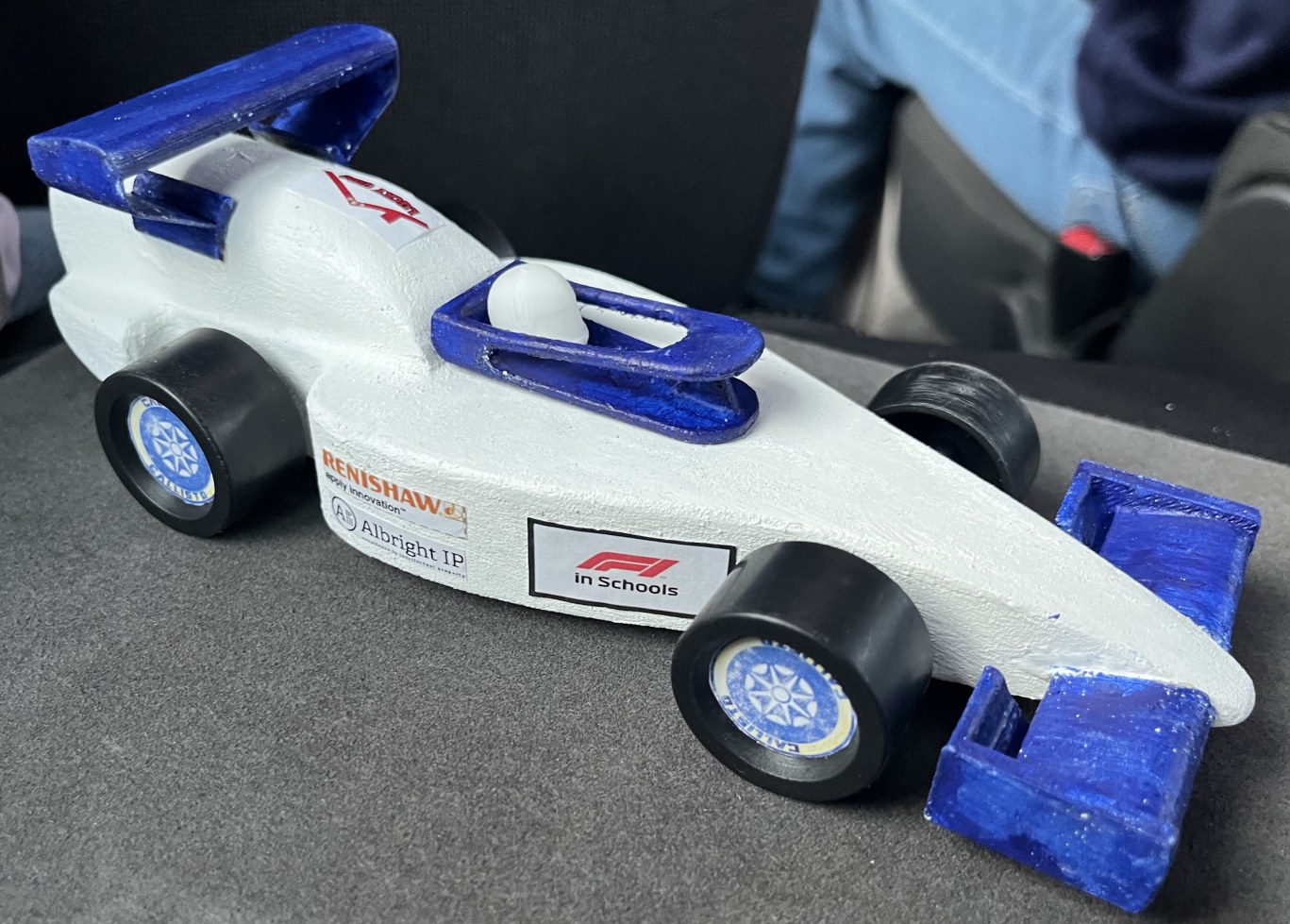
I joined the project in September 2023. It was my first experience of engineering beyond the classroom.
I started as a Design Engineer, using Fusion 360 for modelling. Being part of a real project helped me begin to understand engineering as a subject I could pursue, rather than simply an idea about a future career.
As my role grew to include marketing, sponsor communication and leadership, I came to see how the design work connects with the people and support that make a team project possible. This experience helped me recognise engineering as my professional interest.
STEM Racing brings engineering, manufacturing and enterprise together in a miniature racing-car competition.
Formerly known as F1 in Schools, the programme was founded in 1999. Formula 1 announced its new STEM Racing identity in December 2024. Teams of three to six students design, manufacture and present a miniature car, with responsibilities spanning engineering, branding, marketing and project management.
The car is propelled by a compressed CO₂ cartridge along a 20-metre straight track. Its design must meet detailed technical regulations. A short sprint makes careful attention to aerodynamics, mass, precision and launch performance especially important.
Ages 11–14
Ages 11–19
Ages 11–19
The race is only part of the assessment. Engineering and enterprise portfolios, presentations, pit displays and project management also matter, with requirements varying by class and season. Professional Class provides a pathway from regional to national and world finals.
Competition background: STEM Racing UK · Secondary classes · Rules & regulations
03 / MY RESPONSIBILITIES
One project.
A growing set of responsibilities.
I joined the project and began working on design, using Fusion 360 for modelling.
Alongside my design role, I took on part of the marketing work and began communicating with external sponsors.
I became Team Leader in September 2026. Our 2026 team identity is Velox Racing; earlier photographs and events retain the Callisto Racing name.
04 / DESIGN ENGINEERING
My modelling tool:
Autodesk Fusion 360.
I use Fusion 360 for modelling in this project. Three-dimensional design gives me a way to develop the miniature car’s form and consider how its components fit together.
A STEM Racing Design Engineer develops the car’s design in close collaboration with the Manufacturing Engineer. The areas below describe the wider role; CFD and FEA are background analysis methods here, rather than claims about work I have completed.
Car dimensions, mass, wings, wheels and the cartridge chamber are governed by technical rules. CAD modelling must account for these limits and the tolerances involved in manufacturing.
Comparing body and wing designs helps investigate drag and performance. CFD—computational fluid dynamics—can support these comparisons, alongside physical testing where available.
Reducing mass must be balanced with surviving launch and deceleration. FEA—finite element analysis—is one possible tool for examining stresses in critical parts.
Design versions, calculations and test evidence form a record of improvement. The engineering portfolio and verbal presentation explain those decisions to judges, teammates and sponsors.
05 / RACE DIARY
My STEM Racing competition experience,
formerly known as F1 in Schools.
UNIVERSITY OF BATH · BATH, UK
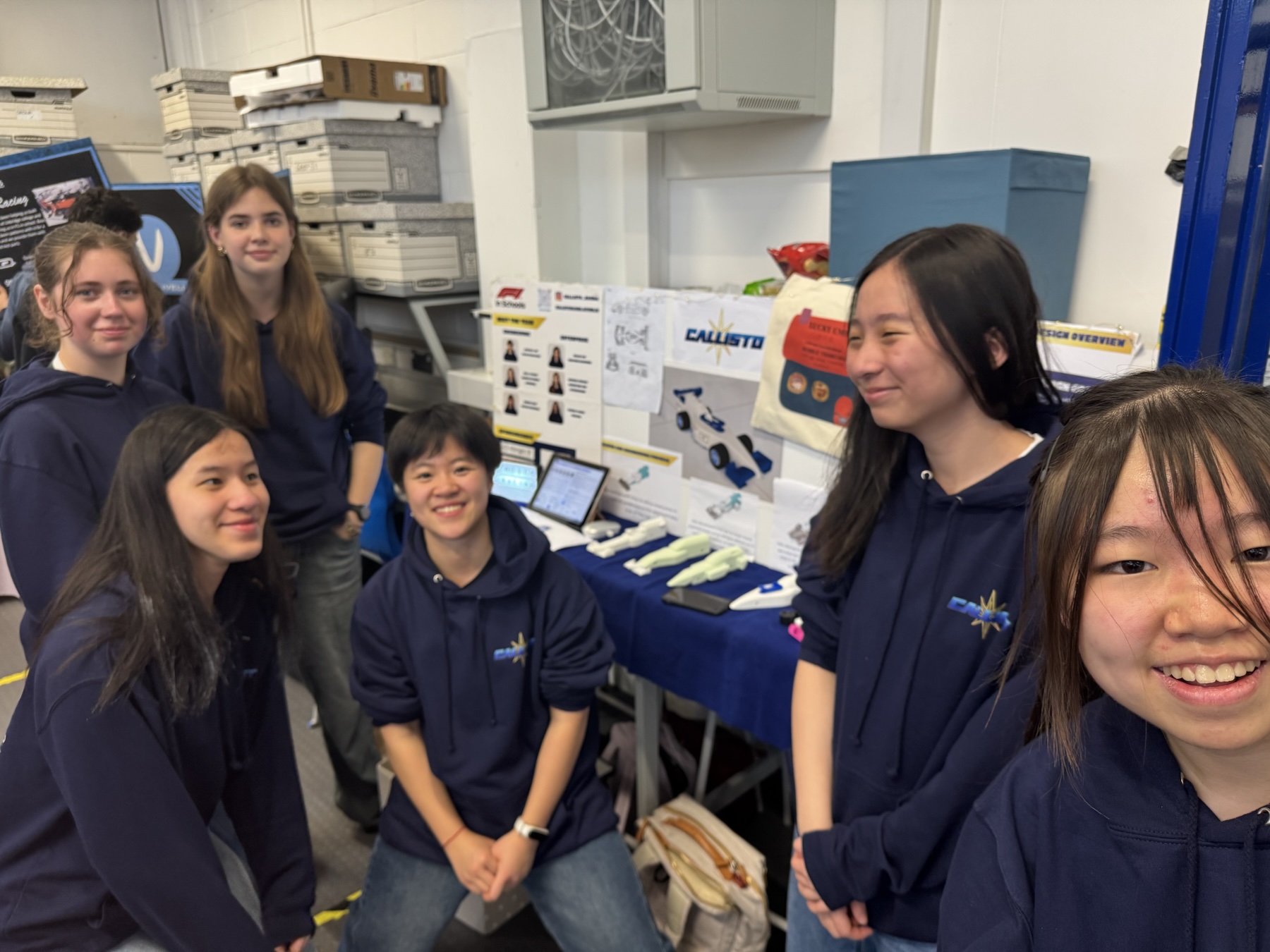
A moment at our earlier Callisto Racing team display: the car, design work and team identity brought together for the competition. The photograph captures the six of us beside our miniature cars and presentation boards. The event report uses the competition’s former F1 in Schools name.
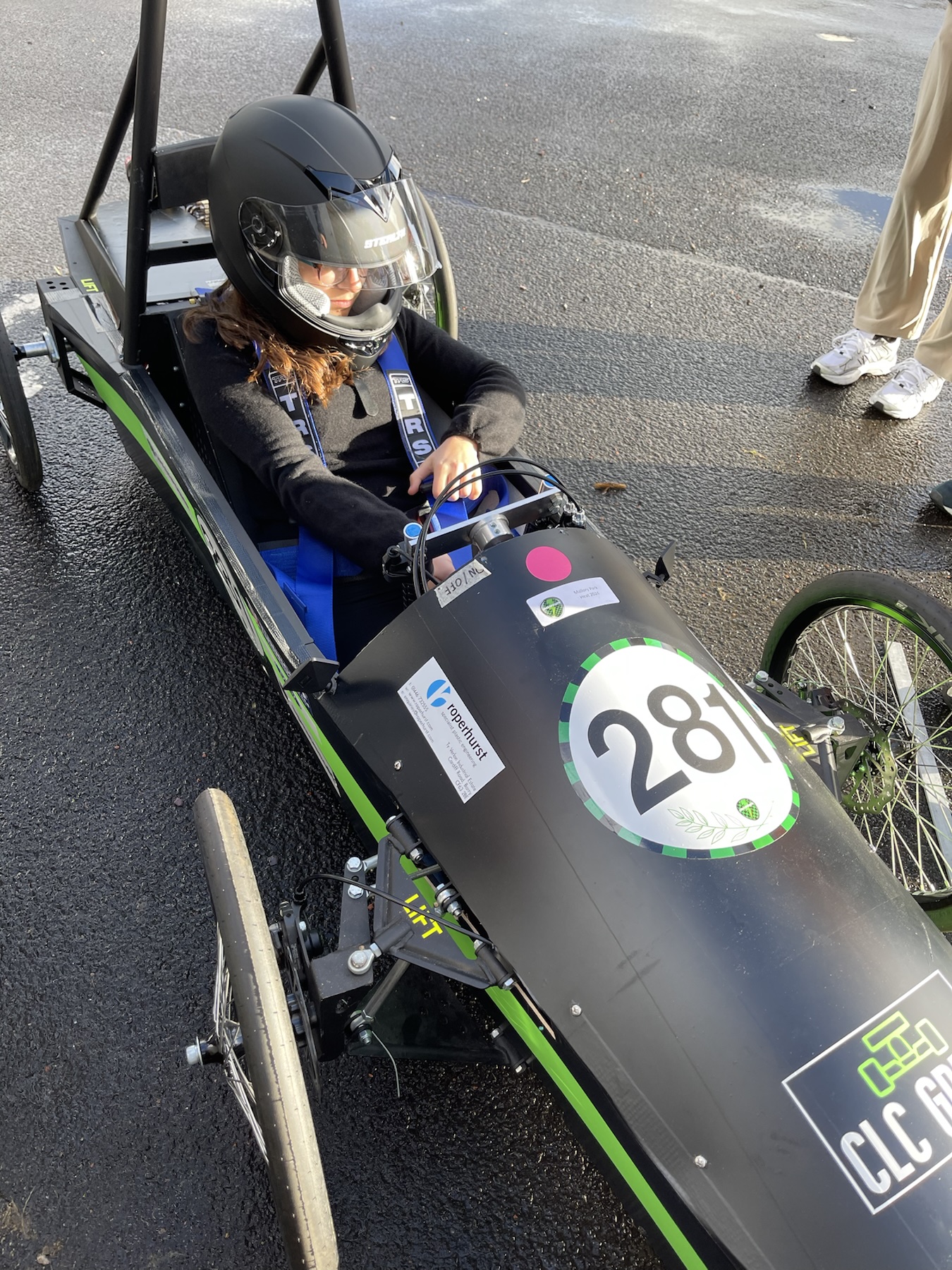
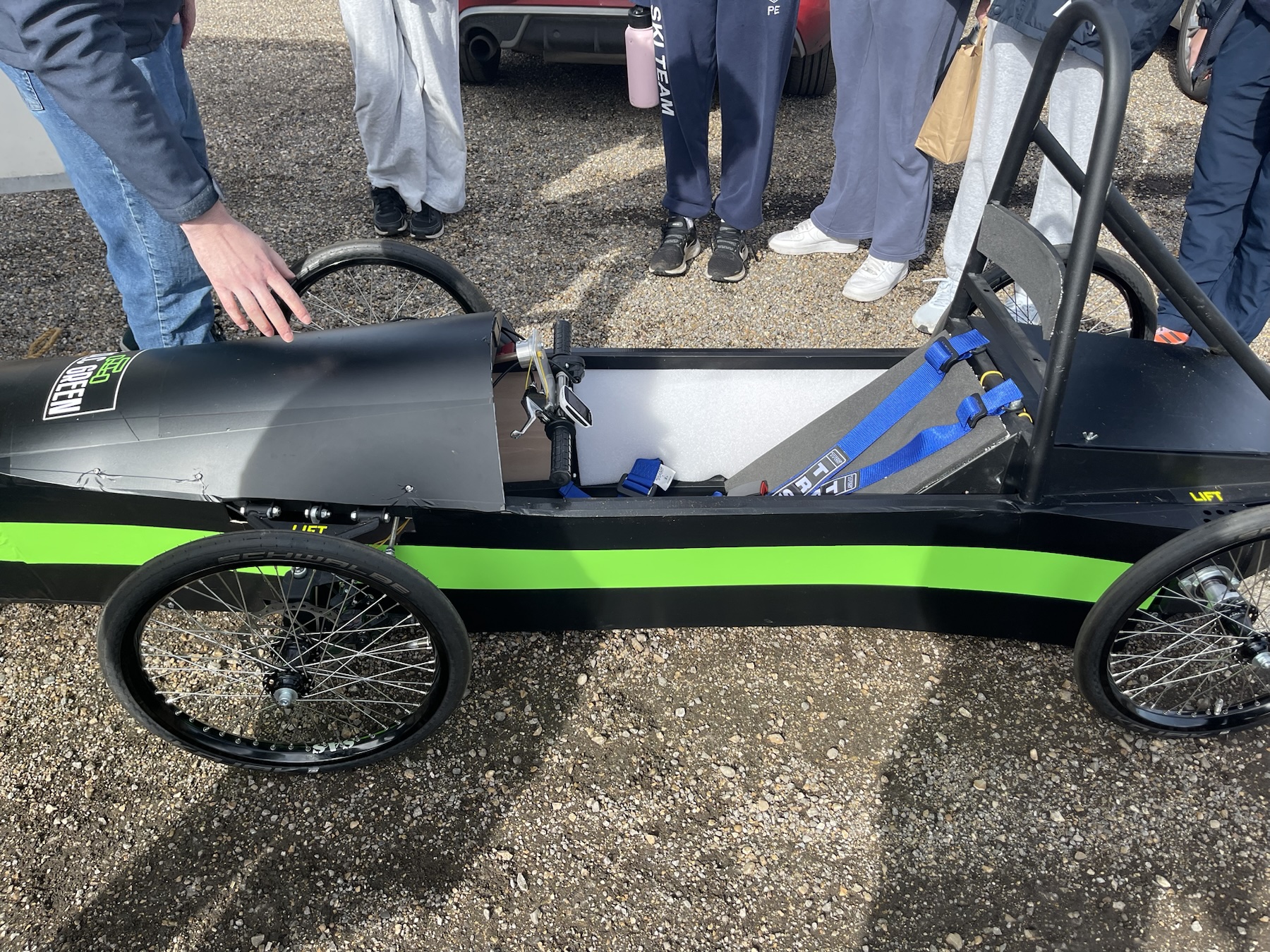
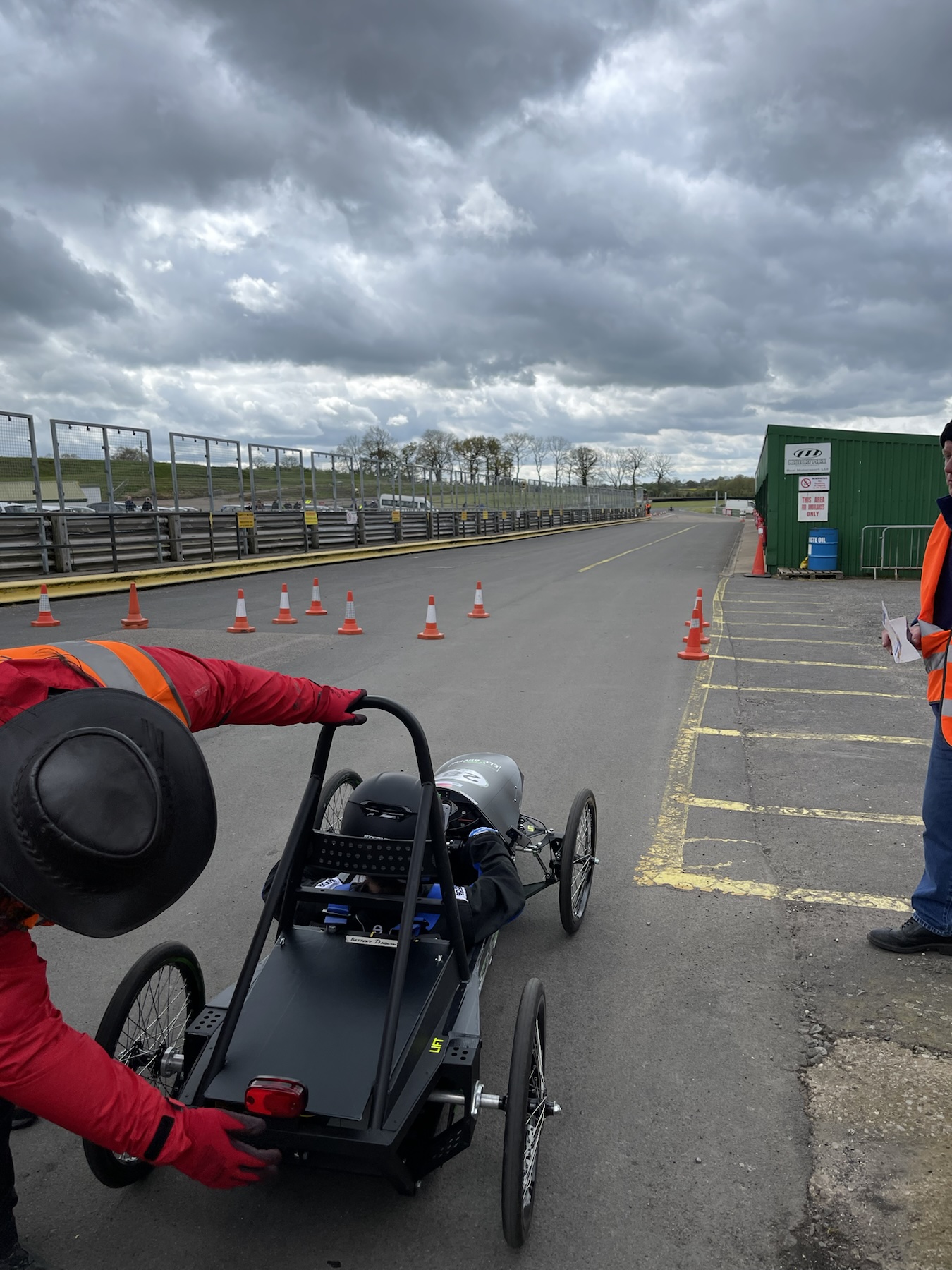
These Aintree and Mallory Park photographs and videos show a separate Greenpower electric-car activity. They are retained as school motorsport material, rather than evidence of this STEM Racing project.
AINTREE MOTOR CIRCUIT · LIVERPOOL, UK
School electric-car racing at Aintree. The photograph shows a helmeted driver seated in the CLC car, number 281, ready for the day’s track activity.
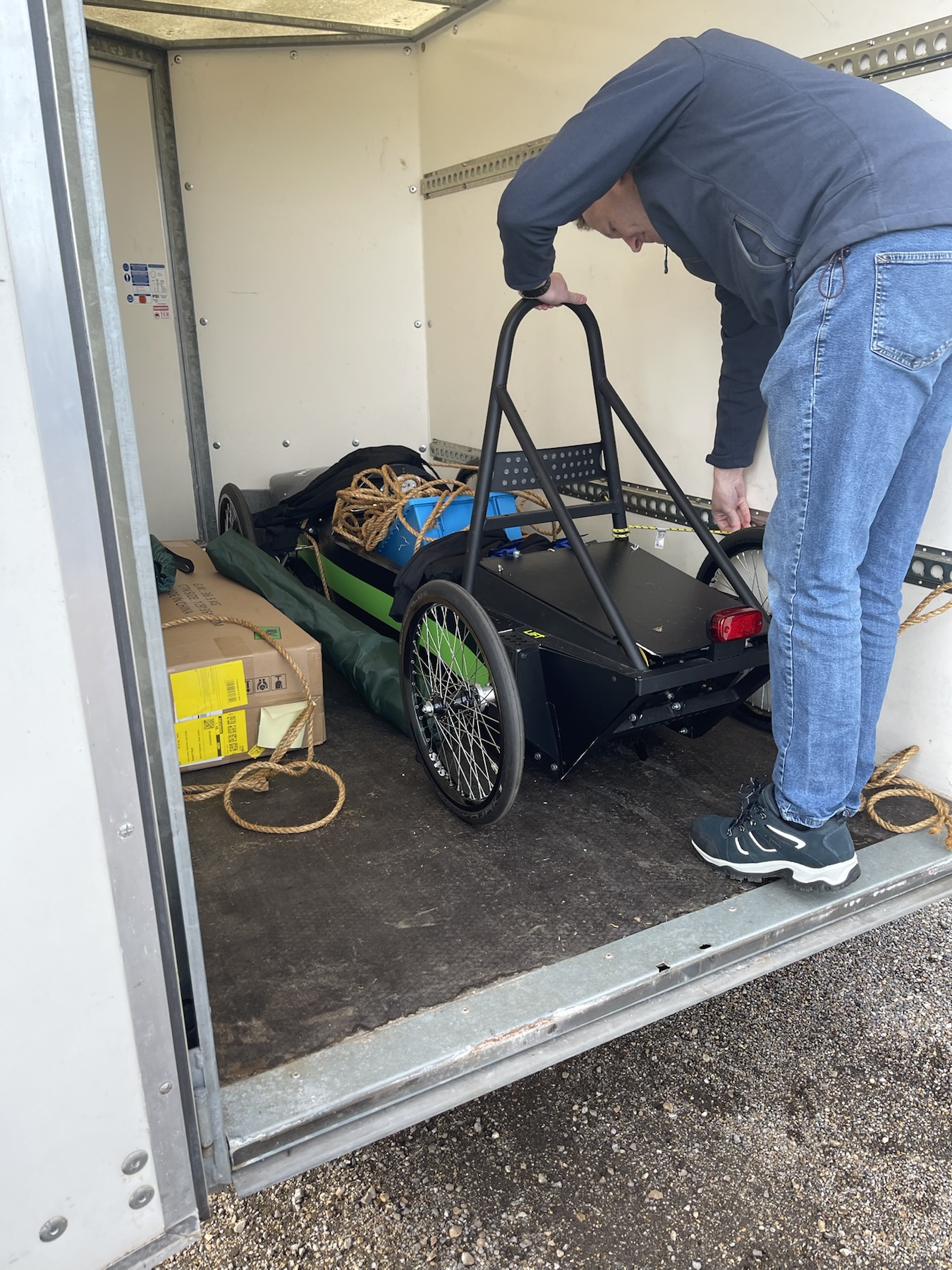
MALLORY PARK · LEICESTERSHIRE, UK
A day of electric-car preparation and track activity at Mallory Park. These photographs and clips follow the car from the paddock and pit lane to the circuit.
This project helped me discover that engineering is what I want to study.
It gave my interest in physics and design a practical setting, and introduced me to the teamwork behind an engineering project. Starting with modelling, then taking on sponsor communication and leadership, has broadened my understanding of what it means to bring an idea into the world.
STEM Racing was the starting point. My later projects in music accessibility continue that interest in building technology that people can use.
Explore my other engineering projectsTHE TEAM & SCHOOL
My personal journey is part of a wider team effort at Cheltenham Ladies’ College. The team now uses the Velox Racing 2026 identity.